

What Is AI Skincare?
AI skincare refers to the use of artificial intelligence and computational technologies to support areas of skincare such as ingredient research, formulation development, skin analysis, personalization and product recommendations.
Instead of relying only on conventional trial-and-error approaches, AI can help researchers process large amounts of data, identify patterns and evaluate potential ingredient combinations or candidates more efficiently.
AI does not replace cosmetic scientists, formulators or clinical testing. Rather, it can serve as a powerful research tool that helps humans make more informed decisions.
At La Exomé, we believe the future of skincare lies at the intersection of advanced science, intelligent technology and sophisticated formulation.
How Is Artificial Intelligence Used in Skincare?
Artificial intelligence can be applied at multiple stages of skincare research and the consumer experience.
1. AI-Assisted Ingredient Discovery
One of the most promising applications of AI in skincare is ingredient research. The number of potential molecules, peptides, botanical compounds and ingredient combinations that researchers could investigate is enormous.
AI models can help analyze large datasets and identify patterns that may help researchers prioritize promising candidates for further laboratory investigation. This can potentially make the early stages of ingredient discovery more targeted and efficient.
However, an AI prediction alone does not prove that an ingredient works. Promising candidates still require appropriate scientific evaluation and testing.
2. AI and Peptide Research
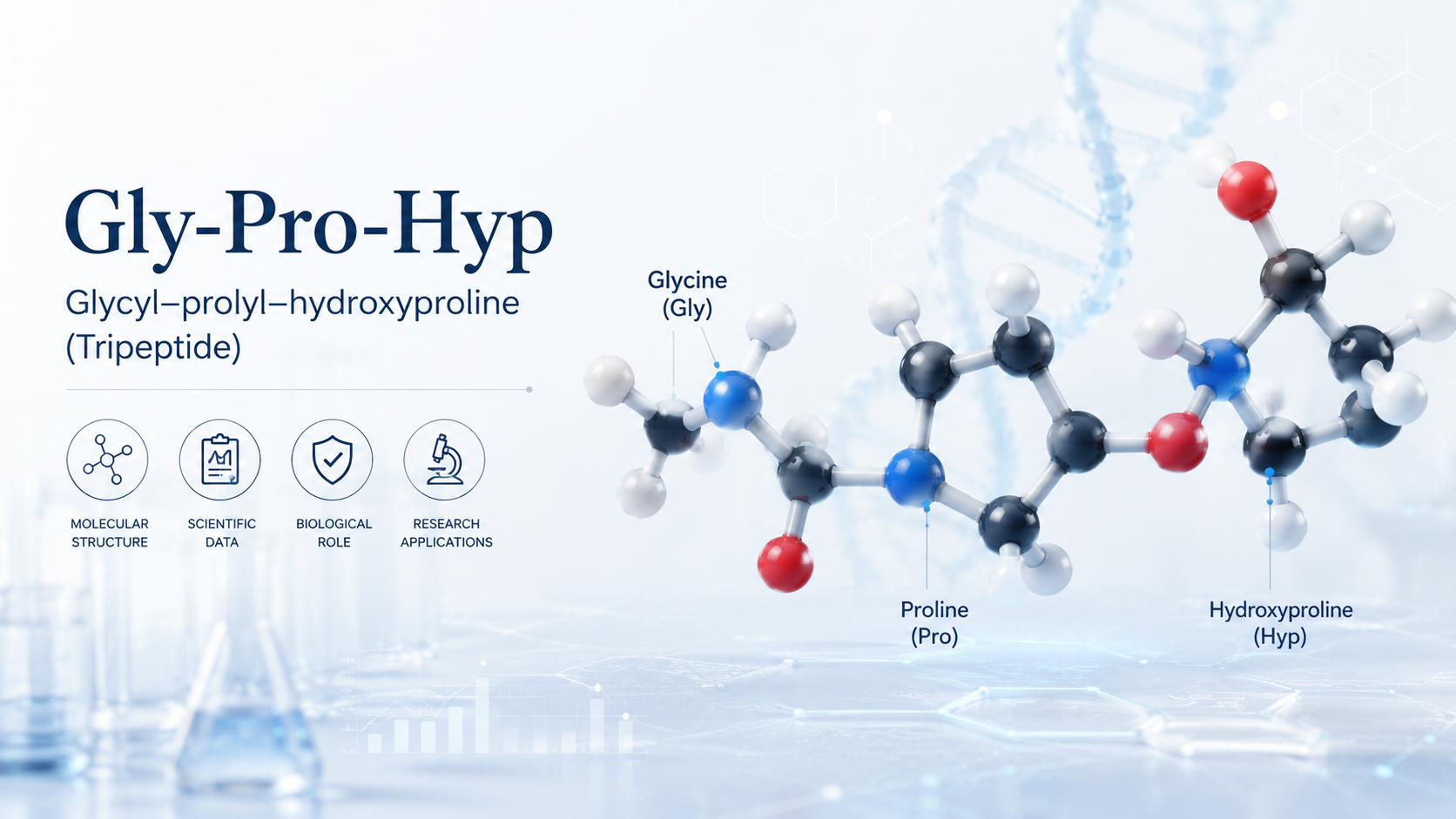
Peptides are short chains of amino acids that are widely used in modern cosmetic formulations.
Because there can be an enormous number of possible peptide sequences, computational techniques can be particularly useful for exploring this landscape.
AI-assisted research can help scientists:
* analyze potential peptide sequences;
* identify patterns associated with desired properties;
* prioritize candidates for further investigation;
* evaluate relationships within large datasets; and
* reduce the number of candidates that need to be examined during early-stage screening.
This combination of computational research and laboratory validation represents an increasingly interesting direction for advanced skincare development.
3. AI Skin Analysis
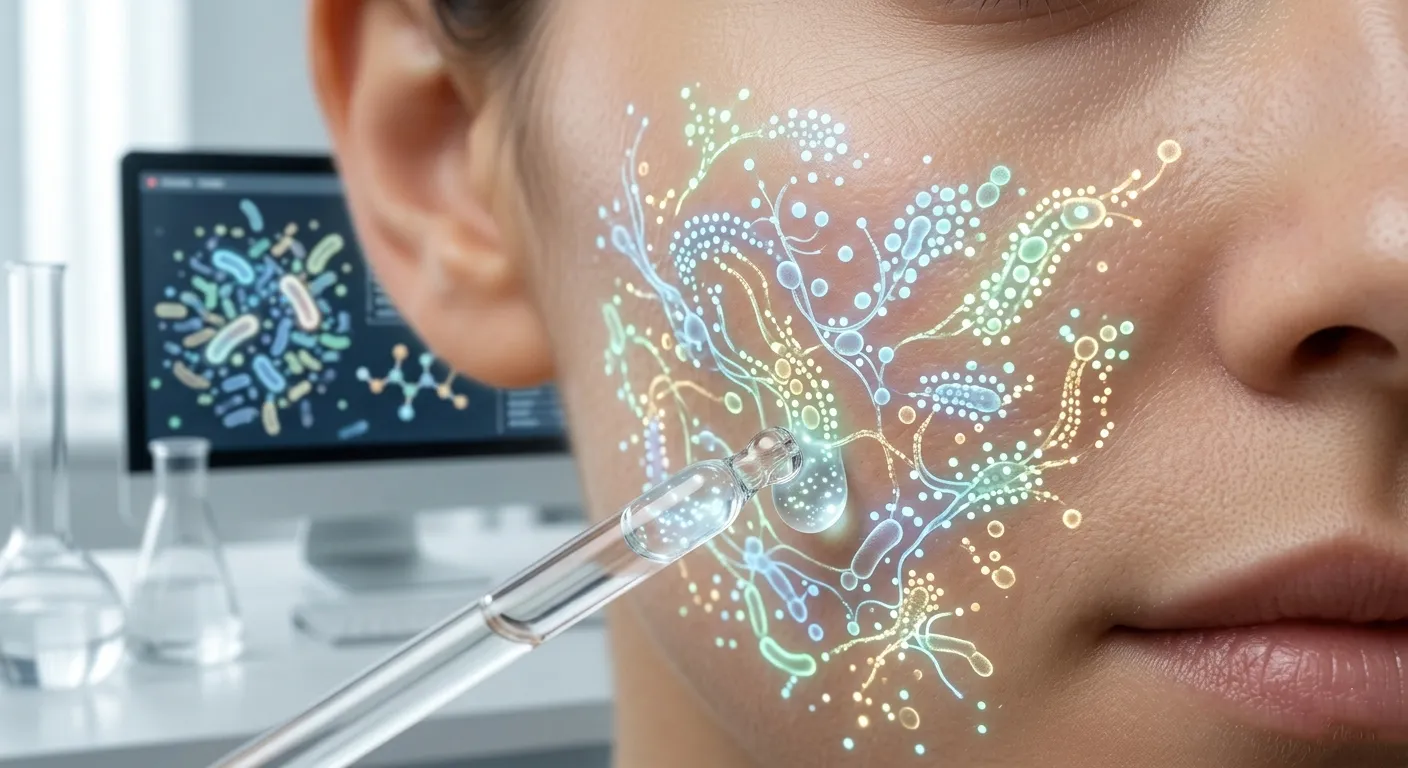
Artificial intelligence can also be used to analyze images and other information relating to the appearance of skin.
Depending on the technology involved, AI-assisted systems may evaluate visible characteristics such as:
* fine lines and wrinkles;
* uneven-looking skin tone;
* visible pores;
* texture;
* blemishes; and
* other observable skin characteristics.
The results may then be used to provide skincare recommendations or monitor changes in appearance over time.
The quality of any AI skin analysis depends heavily on factors such as the training data, imaging conditions, algorithm and validation methodology.
4. Personalized Skincare Recommendations
Traditional skincare recommendations often place consumers into broad categories such as dry, oily, combination or sensitive skin.
AI has the potential to consider a much larger set of variables.
Depending on the system, these might include age, environmental conditions, skincare concerns, product preferences, previous routines and visible skin characteristics.
This can enable more personalized product or routine recommendations.
Importantly, AI-based cosmetic recommendations should not be confused with medical diagnosis. Persistent or concerning skin conditions should be assessed by an appropriately qualified healthcare professional.
5. Is AI Skincare Different From Traditional Skincare?
Yes—but not necessarily in the way people imagine.
AI skincare is still skincare. A beautifully designed algorithm cannot compensate for a poorly formulated product. The difference is how technology may contribute to the research, development, selection or personalization process. Traditional cosmetic development typically combines existing scientific literature, ingredient knowledge, formulation expertise, laboratory development and product testing. An AI-assisted approach can add another layer: the ability to analyze very large amounts of information and identify relationships or candidates that may otherwise require considerably more time to investigate manually.
The strongest approach combines both:
Artificial Intelligence + Cosmetic Science + Human Expertise + Appropriate Testing
6. Does AI Make Skincare More Effective?
Not automatically.
The words “AI-powered” should never be treated as proof that a skincare product is effective.
Consumers should still evaluate the fundamentals:
- What ingredients are used?
- What is their purpose?
- How is the finished product formulated?
- What evidence supports the claims?
- Has appropriate testing been performed?
- Are the claims specific and transparent?
AI is a tool.
What matters is how intelligently that tool is used—and whether the resulting formulation is supported by credible evidence.
7. What Are AI-Designed Skincare Ingredients?
The term can describe ingredients or molecules whose discovery, screening or optimization involved artificial intelligence or computational modelling.
For example, researchers might use computational methods to analyze a large number of potential peptide sequences and identify candidates worth investigating further.
The process can be thought of simply as:
Large Dataset → AI Analysis → Candidate Identification → Laboratory Evaluation → Formulation → Testing
This is different from asking generative AI to simply invent a cosmetic formula.
Responsible AI-assisted skincare development should remain grounded in cosmetic science, safety assessment, formulation expertise and appropriate testing.
8. Why Are Peptides Important in Advanced Skincare?
Peptides have become an important area of cosmetic research because different peptide sequences can have different properties and functions.
In skincare formulations, peptides are commonly investigated for their role in supporting the appearance and condition of skin.
For consumers interested in age-support skincare, peptide technology is particularly relevant because many formulations are designed around concerns such as the appearance of fine lines, firmness, smoothness and overall skin quality.
AI-assisted research potentially expands the way researchers can explore peptide candidates by helping analyze an extremely large number of possible sequences.
9. AI Skincare vs Personalized Skincare: What’s the Difference?
The two concepts overlap but are not identical.
AI skincare describes the use of artificial intelligence somewhere within skincare research, development, analysis or recommendation.
Personalized skincare describes products or routines selected or developed around an individual’s characteristics or needs.
Artificial intelligence can therefore be used to enable personalized skincare, but not all personalized skincare uses AI—and not every AI-developed skincare product is personalized.
10. What Should You Look for in an AI Skincare Brand?
As AI becomes a popular beauty term, consumers should distinguish genuine technological applications from marketing language.
Look for brands that explain:
How AI is actually being used
Is it being used for ingredient discovery, molecular screening, skin analysis, formulation research or recommendations?
The phrase “powered by AI” by itself tells you very little.
What science supports the ingredients
Technology should lead to evidence—not replace it.
Whether claims are transparent
Responsible skincare brands should clearly distinguish between research relating to an individual ingredient and testing conducted on the finished cosmetic product.
Who develops the products
AI should complement experienced cosmetic scientists, formulators and researchers rather than attempt to replace them.
Whether the formulation itself makes sense
Ultimately, consumers apply the formulation—not the algorithm—to their skin.
11. What Is the Future of AI Skincare?
AI could increasingly influence the entire skincare development cycle.
Future applications may include more sophisticated ingredient discovery, faster screening of potential compounds, advanced skin imaging, personalized routines, predictive formulation research and increasingly individualized consumer experiences.
The broader shift is significant.
For decades, skincare has largely asked:
“Which ingredients do we already know?”
AI-assisted research introduces another question:
“What possibilities haven’t we discovered yet?”
That is where the technology becomes particularly exciting.
La Exomé: Where AI Meets Advanced Skincare
La Exomé is a Singapore skincare brand exploring the intersection of artificial intelligence, advanced ingredient research and modern cosmetic formulation.
Our philosophy is not to use AI simply as a marketing label.
Instead, we are interested in how intelligent technologies can contribute to the discovery and development of sophisticated skincare ingredients and formulations while maintaining the essential role of scientific evaluation, formulation expertise and testing.
Our approach brings together AI-assisted innovation, peptide science and carefully selected skincare ingredients to create a new generation of premium skincare.
Because the future of beauty isn’t simply artificial intelligence.
It is intelligence applied beautifully.
Frequently Asked Questions About AI Skincare
1. What does AI skincare mean?
AI skincare refers to the use of artificial intelligence in areas such as ingredient discovery, skincare research, skin analysis, formulation development, personalization or product recommendations.
2. Is AI skincare safe?
The use of AI itself does not determine whether a cosmetic product is safe. Product safety depends on factors including its ingredients, concentrations, formulation, manufacturing standards and appropriate safety assessment.
3. Can AI create skincare ingredients?
AI and computational models can help researchers analyze large numbers of molecular or peptide candidates and identify promising possibilities for further investigation. Those candidates still need appropriate scientific evaluation.
4. Can AI analyze my skin?
Some AI-powered systems can analyze photographs or imaging data to assess visible skin characteristics and provide cosmetic recommendations. These systems should not be treated as substitutes for medical diagnosis.
5. Is AI skincare better than normal skincare?
Not necessarily. AI can potentially improve certain parts of research, development or personalization, but product performance ultimately depends on formulation quality, ingredients and supporting evidence.
6. What is AI peptide skincare?
AI peptide skincare generally refers to skincare involving peptides whose research, identification or optimization incorporated artificial intelligence or computational techniques.
7. Can AI help with anti-aging skincare?
AI may help researchers investigate ingredients and formulations designed to address visible signs of skin aging. However, AI itself is not an anti-aging ingredient, and individual cosmetic results can vary.
8. What is La Exomé?
La Exomé is a Singapore skincare brand focused on combining advanced skincare science, AI-assisted innovation and sophisticated cosmetic formulation to develop premium age-support skincare.
Explore La Exomé
Discover the science, ingredients and formulations behind the next generation of intelligent skincare.